How to Layer Necklaces Like a Fashion Influencer
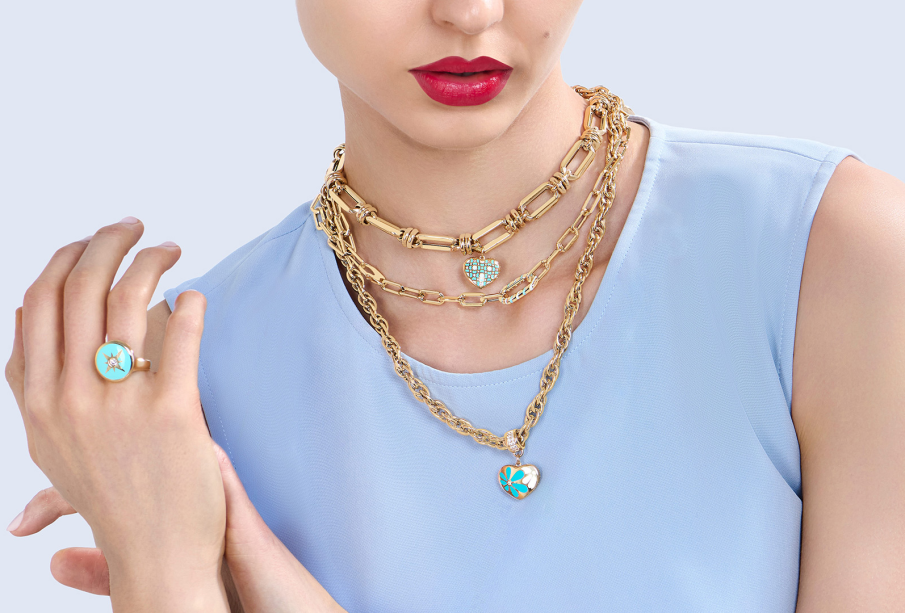
Glance at any curated fashion feed and you will notice a consistent styling detail: effortlessly stacked necklaces that sit with geometric precision against a crisp collar or bare collarbone. What looks like a casual morning afterthought is actually a calculated exercise in balance, proportion, and weight.
When done incorrectly, wearing multiple necklaces quickly deteriorates into a chaotic, tangled knot that twists around your neck and distracts from your outfit. Fashion creators avoid this through specific structural formulas. By mastering length intervals, chain weight variations, texture combinations, and neckline coordination, you can turn a drawer of scattered jewelry into a cohesive, editorial stack.
The Basic Structural Formula: Tiered Spacing
The foundation of successful necklace layering lies in spacing. If two chains rest at the exact same point on your chest, they will inevitably cross over one another, obscure each other’s details, and tangle within minutes. Professional stylists build stacks around three distinct zones: the base, the focal anchor, and the drop extension.
The Choker or Collar Base: 14 to 16 Inches
Every successful stack starts at the top. This tier hugs the base of the neck or sits lightly on the collarbone, defining the upper boundary of your jewelry arrangement.
-
Subtle Chains: A fine cable chain or a flat snake chain provides a sleek, modern foundation that sits completely flush against the skin.
-
Beaded or Pearl Strands: A delicate strand of micro freshwater pearls or petite semi-precious stone beads injects color and tactile contrast right at the hollow of the throat.
-
Rigid Choker Bands: A slender, open-ended metal torque or flat choker keeps the uppermost layer rigid, preventing lower, looser chains from migrating upward.
The Mid-Tier Anchor: 18 to 20 Inches
The mid-tier piece serves as the visual centerpiece of your composition. It rests comfortably below the collarbone, bridging the gap between your highest and lowest layers.
-
Pendants and Coins: Embossed medallions, astrological charms, or vintage signet charms provide a solid visual weight that catches the eye and breaks up the linear path of simple links.
-
Statement Link Variations: A medium-gauge paperclip chain, a flat mariner link, or an intertwined rope chain adds dimension without needing an extra hanging pendant.
The Low-Drop Extension: 22 to 24 Inches and Beyond
The final layer draws the eye downward, creating a flattering, elongated vertical line. This piece is essential for elongating the torso and balancing out heavier clothing layers like oversized blazers, cardigans, or chunky knits.
-
Locket or Heavy Pendant: An elongated cable chain carrying a substantial vintage locket, an obelisk stone, or a structural bar provides enough tension to pull the entire chain taut, keeping it centered.
-
Lariat or Y-Drop Chains: Featuring a central drop that continues downward past the connecting ring, a lariat chain deepens open necklines and adds sophisticated movement to evening wear.
Mixing Textures, Weights, and Scales
A common mistake is stacking three identical thin chains together. While this seems safe, identical chains are the primary culprit behind severe tangling, as the identical links catch against one another. Influencers intentionally vary textures and gauges to keep chains visually distinct and physically separated.
-
Contrast Smooth Surfaces with Faceted Links: Pair an ultra-smooth, reflective herringbone chain with a deeply textured diamond-cut rope chain. The fluid, flat movement of the herringbone acts as a striking backdrop against the dimensional, sparkling links of the rope.
-
Mix Heavy Links with Delicate Strands: A heavy curb chain or chunky paperclip link commands visual authority; ground it by framing it with a wispy box chain or an airy satellite bead chain.
-
Integrate Organic Elements: Do not limit your selections solely to high-polish metals. Woven cord accents, baroque pearls with asymmetrical contours, raw crystal slivers, and enamel charms interrupt shiny metallic surfaces, yielding a rich, bespoke aesthetic.
Working with Mixed Metals
The traditional rule forbidding the combination of yellow gold, white metals, and rose tones has been thoroughly retired. Fashion influencers frequently mix metals to give their jewelry stacks a relaxed, collected-over-time character rather than an overly matched, department-store look.
The secret to intentional metal mixing is balance:
-
Adopt the Dominant Ratio: Establish an intentional seventy-thirty or eighty-twenty split. If your primary collection features yellow gold, make your base and focal anchor gold, then weave in a single, high-contrast sterling silver curb chain as the middle link.
-
Incorporate Dual-Tone Bridge Pieces: Use a single chain or pendant that naturally integrates both metals, such as a two-tone paperclip chain featuring alternating silver and gold links, or a silver medallion suspended from a gold bail. This deliberate connector signals that the combination is an intentional styling choice.
-
Coordinate with Other Hardware: Mirror your mixed metals in secondary accessories, such as matching a silver necklace chain with silver belt hardware, while letting your gold rings and bracelets complement the gold base layers in your stack.
Coordinating Layered Necklaces with Necklines
Even the most thoughtfully curated necklace stack will fall flat if it fights against the silhouette of your clothing. Your top’s neckline should frame your jewelry, never compete with it.
The Deep V-Neck
V-necks are arguably the easiest canvas for layered chains. The plunging triangular cut mirrors the natural drop of dangling pendants.
-
How to Style: Mirror the V-shape by arranging your chains into sharp descending tiers. Begin with a 15-inch simple link, follow with an 18-inch charm, and finish with a 22-inch pendant or lariat that echoes the point of the garment.
The Classic Crewneck and High T-Shirt Collar
High crewnecks push necklaces into the spotlight by placing them directly against fabric rather than bare skin.
-
How to Style: Because chains easily bunch up or slip beneath the seam of a high neckline, choose pieces that either rest securely on the fabric or sit entirely clear of the ribbed trim. Opt for heavier, thicker chains—such as wide curb or chunky paperclip varieties—that carry enough weight to resist moving against cotton jersey. Keep all chains either firmly outside the collar or well above it against bare skin.
The Open Button-Down Shirt
A relaxed, unbuttoned poplin or silk shirt offers an effortless, European-inspired backdrop for layered necklaces.
-
How to Style: Unbutton the top three buttons and tuck your layers neatly into the open chest frame. Layer a delicate 14-inch choker with a medium 18-inch coin pendant. Let the pendants settle naturally within the open collar space, occasionally catching the edge of the fabric as you move.
The Sleek Turtleneck
Turtlenecks during autumn and winter provide a blank, high-contrast backdrop ideal for highlighting jewelry.
-
How to Style: Abandon delicate, thin-gauge chains entirely, as they snag on knitwear and vanish against thick textures. Shift your lengths downward: skip the choker completely and start with a 19-inch medium chain, extending down to a 26-inch or 30-inch heavy chain carrying an architectural statement piece.
Practical Solutions for Tangle Prevention
The single greatest hurdle to wearing multiple chains throughout a busy day is the inevitable knot that forms at the nape of your neck. Influencers employ several mechanical tricks to keep their stacks sitting neatly all day long.
-
Use a Multi-Strand Necklace Spacer: These small, magnetic or slide-locking clasps attach to the individual spring rings of your necklaces, keeping the closure ends spaced parallel to each other at the back of your neck. This stops the clasps from spinning around to the front and prevents individual chains from wrapping around each other.
-
Vary the Weight Profiles: Never combine three ultra-lightweight chains. Stacking a light chain alongside a heavier chain forces the heavy piece to remain anchored while the lighter chain floats smoothly in its dedicated arc above it.
-
The Cross-Clasp Method: If you are wearing two chains of similar length, clasp the left end of Necklace A to the right end of Necklace B, wrap both around your neck, and join the remaining ends together. This interlocks the two chains into a single cohesive loop, dramatically decreasing internal friction and tangling.
Layering necklaces like a fashion insider does not require buying a brand-new collection of designer pieces. By thoughtfully evaluating lengths, balancing contrasting link styles, respecting the lines of your clothing, and utilizing proper spacer mechanics, you can transform your existing jewelry into striking, personalized combinations for any occasion.
Frequently Asked Questions
What is the ideal number of necklaces to wear at once?
Three necklaces represent the universal sweet spot for everyday balance. A trio provides sufficient variety in scale, texture, and length without feeling cumbersome or excessive. Two chains can occasionally look plain or incomplete, while four or more often require constant adjustments to prevent tangling unless secured with specialized hardware spacers.
Can you layer necklaces with high-cut halter or boatneck tops?
Boatneck and halter silhouettes rarely pair well with traditional layered necklaces because their horizontal or inward-angled necklines visually clash with descending vertical chains. For these specific cuts, it is usually better to skip chest layering entirely and redirect focus to statement earrings, cuff bracelets, or bold rings.
How do you keep lightweight necklace clasps from sliding around to the front of your chest?
Clasps slide forward when a necklace lacks sufficient counterweight on the front side to overcome the weight of the closure, or when clothing fabric drags the chain as you move. To prevent this, attach a small decorative pendant to act as an anchor, use a necklace spacer tool at the nape of your neck, or temporarily fasten the clasp to the inner collar seam using a tiny safety pin.
What should you do if an intricate herringbone chain twists while layered?
Herringbone chains are constructed from flat, tightly interwoven parallel segments that will kink or warp if forced into sharp curves. When layering a herringbone, wear it as the shortest or second-shortest layer, ensure it sits completely flat against your skin, and never pair it with heavy hanging charms that pull down on its delicate center links.
Is it acceptable to layer necklaces featuring different types of stones or beads?
Yes, combining varied stones creates an eclectic, elevated aesthetic if held together by a common undertone. Pairing small pearls with turquoise beads, rough-cut quartz, or onyx brings dynamic color and organic texture to an otherwise simple metal arrangement. Keep the bead diameters small to prevent the overall stack from looking crowded.
How do you untangle multiple delicate gold chains that have formed a tight knot?
Place the tangled chains flat on a hard, clean surface under bright lighting. Apply two or three drops of mineral oil or baby oil directly to the knot to reduce friction between the links. Take two sewing needles or fine safety pins and gently tease the center loops of the knot apart from the middle outward, avoiding sharp pulling forces that can stretch or snap delicate links.
Can men wear layered necklaces using the same guidelines?
The same principles of varied length, alternating weights, and neckline coordination apply directly to menswear. Men typically build stacks starting at slightly longer lengths, such as an 18-inch curb chain paired with a 22-inch or 24-inch pendant chain carrying a medallion, feather charm, or tag, worn cleanly over open camp-collar shirts or solid crewneck tees.